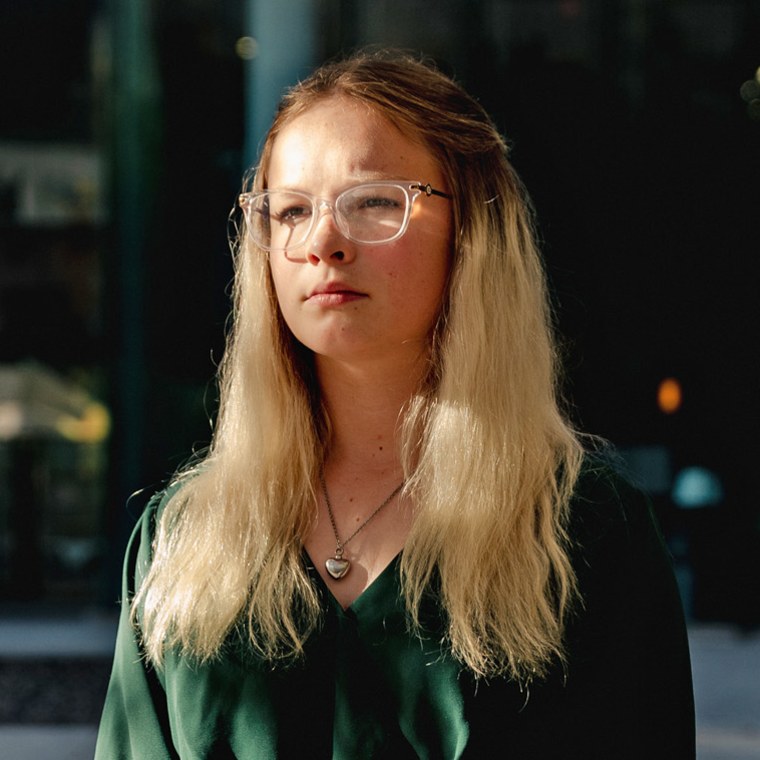
In Haiti, 'video has not killed the radio star'

Paolo Woods recently photographed radio stations and their listeners around his home in Les Cayes, Haiti. Here he explains why so many Haitians use radio as their main source of news and entertainment:

More than 50 percent of Haitians are illiterate, and only 25 percent have regular access to electricity. That means most Haitians do not read the country’s only daily newspaper, regularly watch television, or while away the hours surfing the Internet.

But they can listen to the radio. And Haitians do listen, all the time.

Paolo Woods / INSTITUTE

RTMS 97.3 FM. DJ John is on the air mixing Haitian music and American R&B. RTMS relays for a couple of hours each day Radio Voice of America. People in Les Cayes suspect it receives American money for this reason and some refer to it as Radio CIA.

Since the introduction of battery-operated transistor receivers in the 1960s, radio has been the main media in Haiti. American missionaries donated the first transistor radios, hoping to convert the masses through the 24-hour evangelical programming on Radio Lumière. But in the hellish years of the Duvalier dictatorship, Haitians far preferred the radio programs in Creole broadcast on Radio Haiti Inter by legendary opposition figure Jean Dominique, to being constantly reminded about hell awaiting them if they did not become Protestant.

When Baby Doc fled in 1986, finally ending the Duvalier era, independent radio stations flowered and have been a fixture in Haitian daily life ever since.

Haitians are not passive listeners, either. Not only do many shows rely on call-in contributors, but many Haitians have taken to broadcasting themselves. Broadcasting material and operations are relatively inexpensive, so very small groups of people can mount and operate local stations. Thus, there are hundreds of radio stations in Haiti. They closely mirror society in almost all its political, religious, and social variations.

Paolo Woods / INSTITUTE

Radio Lumiere 90.9 FM. This is one of the oldest Protestant radio stations. It has stations all over the country and is financed by the American and German Baptist churches. Pastor Emile Alneve has just read from the Bible and is about to lead the listeners in prayer. Behind the glass is the operator Nahomie Desmornes.

You can listen to Radio Lumiere with this iTunes playlist link or with this Windows Media Player link.

Radio has a crucial importance in the daily life of Haitians. Radio waves reach remote areas that cannot be reached by 4x4 vehicles. Easily available batteries or solar-powered radios ensure that people can stay tuned in. Ninety-seven percent of the population owns a radio, and they all listen to it.

Paolo Woods / INSTITUTE

Radio Men Kontre 95.5 FM. Men Kontre ('united hands' in Creole) is the radio station of the Catholic diocese of Les Cayes. Sister Melianise Gabreus is one of the stars of the station. Even if there are no official figures, father Elysee (who runs the station) says that lots of people tune in for Sister Melianise's program on daily life advice.

Besides the ubiquitous Kompa music, radio stations host endless political discussions, live broadcasts of European football, proselytism by dozens of religious groups, local news and educational programs. Haitian president Michel Martelly was a former Kompa star, and when he entered the presidential race in 2010 he had absolutely no political experience. But he had millions of dedicated followers who knew him through radio, where his music is on constant rotation.

When the cholera epidemic broke out in 2010, stations bombarded listeners with instructions on avoiding the deadly disease and getting help for their sick. This was vital especially in rural areas—most of the country—as Haiti had not known a cholera epidemic in at least a century. Experts agree that radios have been essential in saving lives.

Paolo Woods / INSTITUTE

Radio Lumiere 90.9FM. This Baptist radio station often broadcasts live from churches in remote villages, like here from the village of Kay Toro where the local choir is performing. Kay Toro is more than 3 hours on a difficult dirt road from Les Cayes.

I have photographed a selection of DJs and speakers of different radio stations in Les Cayes, the city in the south of Haiti where I live. The city, population 50,000, has an estimated 30 radio stations—one for every 1300 people—but even this figure likely understates the number of radio stations. Many stations don’t register so as to avoid paying taxes. The speakers are journalists, politicians, community activists, Vodou priests, students, nuns and pastors. The broadcasting equipment is often very bare bones. A used transmitter, mixer, antenna and generator can cost as little as $2,500 and be housed in a few free square meters wherever space is available. I also photographed, in a 100m radius around my house, a sampling of the actual radio receivers used by my neighbors. These vary from old, bulky cassette players to recent mobile phones.

Paolo Woods / INSTITUTE

Receivers used by people in Les Cayes to listen to one of the many radios broadcasting in their city.

On a recent afternoon, I was walking down the main street in Les Cayes with Franz Nazaire, one of the local radio hosts. He was recognized and greeted by dozens of listeners. He turned around to me and smiled “You see? In Haiti, video has not killed the radio star!"

More visual coverage of Haiti on msnbc.com:

Social breakdown fuels sexual violence and its aftermath in disaster-ravaged tent cities.

Discuss this post

That is awesome. Hearing the words is good. Lord Christ has said that "Whoever has ears, let them hears."

Starting from hearing is always good...

    Reply#1 - Thu Feb 2, 2012 12:29 AM EST

    "Haitians far preferred the radio programs in Creole broadcast on Radio Haiti Inter by legendary opposition figure Jean Dominique, to being constantly reminded about hell awaiting them if they did not become Protestant"

    And I say, Let all who have eyes READ the article before commenting on it.

    • 1 vote
    #1.1 - Thu Feb 2, 2012 4:59 AM EST

    I hope that "Radio CIA" is in fact being funded by the U.S. govt. to play two hours a day of Voice of America. That's a "foreign aid" program that even I can believe in. Bet it's one of the most cost-effective things that we do.

      #1.2 - Thu Feb 2, 2012 10:16 PM EST
      Reply

      If charities spent as much time trying to rebuild the place, as they do trying to convert people, the place would be back to its former self by now.. But thats not really in their best interest, is it...

      • 1 vote
      Reply#2 - Thu Feb 2, 2012 4:08 AM EST

      Your comment is interesting, but not very factual. Christian ministries in Haiti spend far more of their money meeting human needs than evangelizing. Even before the earthquake when most people weren't thinking about Haiti, most of the schools in the country were provided by Christians. The majority of the hospitals, clinics, and other medical services, including the best in the country were financed by church organizations of all types. There are agricultural, nursing, and trade schools throughout the country financed by by Christian ministries. After the earthquake, the very first people on the scene, within less than 24 hours were mission organizations who spent millions of dollars providing medical and other assistance. I don't have any statistics, but I have seen many more houses built and given to people since the earthquake by Christian organizations than by any governmental or secular organizations. This is the truth which I have confirmed with my own eyes.

        #2.1 - Thu Feb 2, 2012 4:52 PM EST

        In fact, I wouldn't give anything directed toward Haiti that wasn't going though an evangelical organization. Not that they are perfect, but a far higher percentage of the aid seems to get through to the people than with governmental aid or secular NGO's, which seem to be diverted to the friends of the elites in short order for the most part. Perhaps this is no more than a superstitious impulse which leads many to be afraid of interfering in "God's work", but nonetheless seems to be true.

          #2.2 - Thu Feb 2, 2012 10:20 PM EST
          Reply

          start shipping these people some ipods for God's sake!

            Reply#3 - Thu Feb 2, 2012 6:13 AM EST

            I appreciated this article. Americans have a hard time understanding the importance of radio in Haiti but Paolo has a good understand and explains it well. I have been involved in Haiti and Radio Lumiere since 1964 and returned from Les Cayes just last Friday. I lived full-time in Haiti for 16 years and speak and understand Creole. Radio Lumiere is known as "The Haitian Cultural Network". From it's very beginning in 1959 its goal and purpose has been to address all aspects of human need. It is not a 24 hour preaching station. Good news coverage, educational programming, medical information, and Haitian music development have always been part of the programming. It has always had a broad public acceptance and local support. It was the first radio service to do any significant creole broadcasting. Although started by missionaries, for more than 20 years Radio Lumiere has been a totally Haitian enterprise. It is owned, managed, operated, and mostly financed by the Haitian people. It is my great joy to serve beside them in the good work that they are doing, as a volunteer engineer.

            Jerry

              Reply#4 - Thu Feb 2, 2012 10:30 AM EST

              Jerry: Were the previous broadcasters all in "proper" French?

                #4.1 - Thu Feb 2, 2012 10:22 PM EST

                Rlquall,

                The answer about "proper" French broadcasting depends a lot on the exact time frame. The acceptance of Creole as a proper language probably has taken over 40 and has been gradual. Creole was not a written language until sometime in the 40's as I recall. When I first went to Haiti in the 1960's it was still despised as something than only the lower classes spoke. All education was in French as well as virtually everything written. You had to know French to conduct business. The Bible was one of the few things written in Creole, but very few people know how to read it. Over the years Creole became more acceptable. It was not until the 80's or 90's that it became an acceptable and official language and a standard for written Creole was accepted. The shift to using Creole in broadcasting followed along with the cultural acceptance and was gradual.

                The story of broadcaster Jean Dominique and Radio Haiti Inter is a fascinating story and is told well in the movie, The Agranom (may not have spelled that correctly). He made a great contribution to broadcasting, news, Creole language, and politics in Haiti, but he was not the first to do these things.

                  #4.2 - Fri Feb 3, 2012 9:59 AM EST
                  Reply

                  if politicians in haiti keep stealing donations for the past few decades, WHY does haiti then keep asking for donations and people keep giving if none [of the money] is helping the people? that's like a man telling you to give him your money and he will help others but after you do it, you see him, FOR DECADES walk down the block to buy drugs or alcohol. this makes absolutely no sense. STOP DONATING TO HAITI. it's all a big scam. for DECADES to boot.

                  and i also read and spoke to many people about how charities and politicians or whoever begs for these handouts alike LOVE when disaster strikes so foreign aid begins to flow in. natural disasters=paychecks for these people.

                    Reply#5 - Thu Feb 2, 2012 12:59 PM EST

                    There are certainly charities that are scams and even more who are just wasteful with their money. That doesn't nullify the good things that many others are doing. It pays to research and know any organization that you give to. Donations through good organizations that do their own work in Haiti do not go through the government so there is no chance for the government to misuse them.

                    Bottom line: Donor beware and donate wisely.

                    • 1 vote
                    #5.1 - Thu Feb 2, 2012 4:56 PM EST

                    well, maybe it won't be like that forever, governments can change, especially with a people that knows it has a moral and guiding support for a better life.

                      #5.2 - Thu Feb 2, 2012 5:08 PM EST
                      Reply
                      You're in Easy Mode. If you prefer, you can use XHTML Mode instead.
                      As a new user, you may notice a few temporary content restrictions. Click here for more info.